
Portfolio – BLE Drone Recovery Beacon V1
Project intro
This project started from a very practical problem: after a drone crash, the general area is often known, but finding the aircraft in grass, bushes or uneven terrain can still take a surprisingly long time. I wanted a small device that could stay independent from the drone itself and help with the last part of the search.
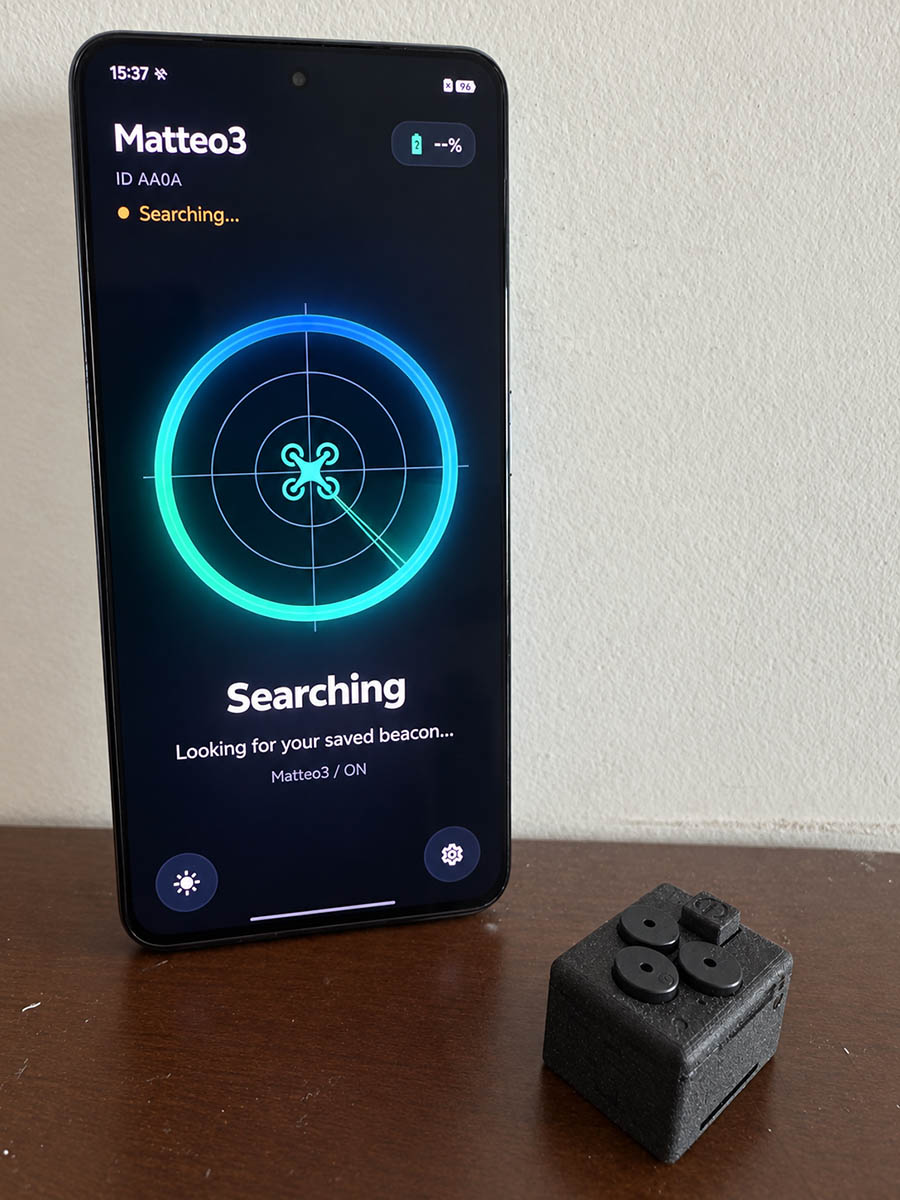
The result is a compact, battery-powered recovery beacon designed to be strapped onto a drone. It combines automatic crash detection, a loud audible alarm, a status light and Bluetooth Low Energy (BLE). A companion mobile app connects to the beacon and uses the received BLE signal strength as a rough proximity indicator, helping guide the search once the user is near the crash area.
The beacon is intentionally not a GPS tracker and does not use a SIM card or mobile network. The idea is simpler: once the pilot has a reasonable idea of where the drone went down, the beacon should make the final search faster and less frustrating. Because it has its own battery, it can continue working even if the drone battery is disconnected or damaged in the crash.
Building process
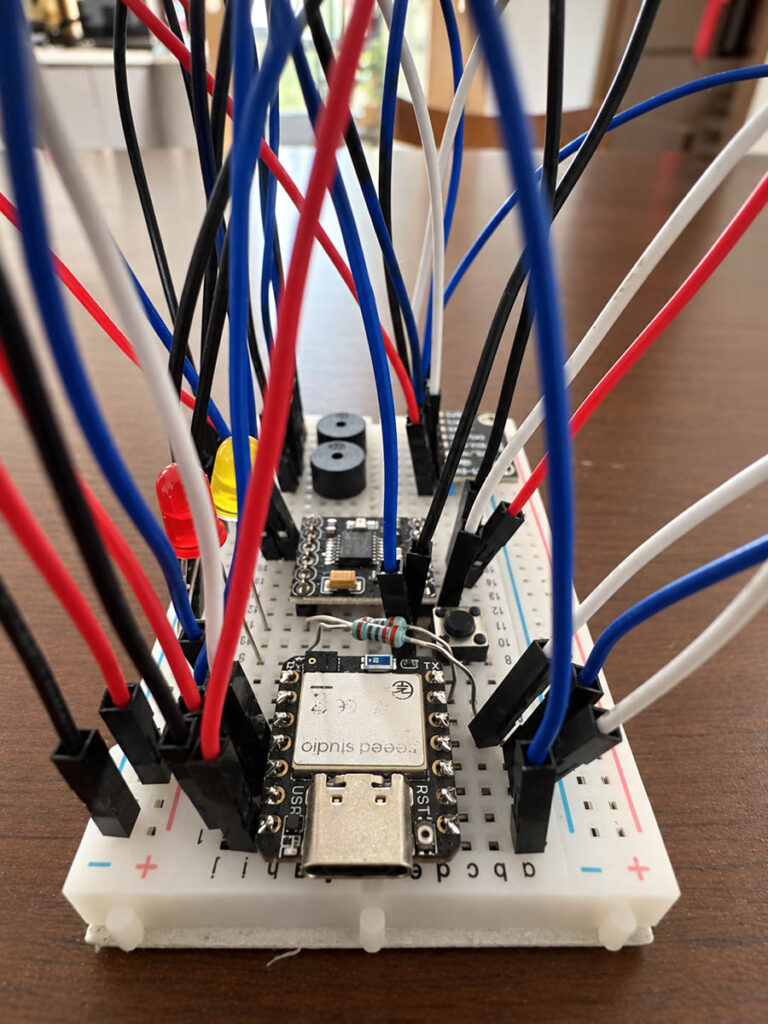
First prototype – I began with a rough breadboard prototype. At that stage the goal was not size or appearance; it was simply to prove that the main idea worked. The prototype let me test the microcontroller, inertial sensor, Bluetooth communication, button logic, indicators, charging-related behavior and the first version of the firmware before spending time on a custom PCB.
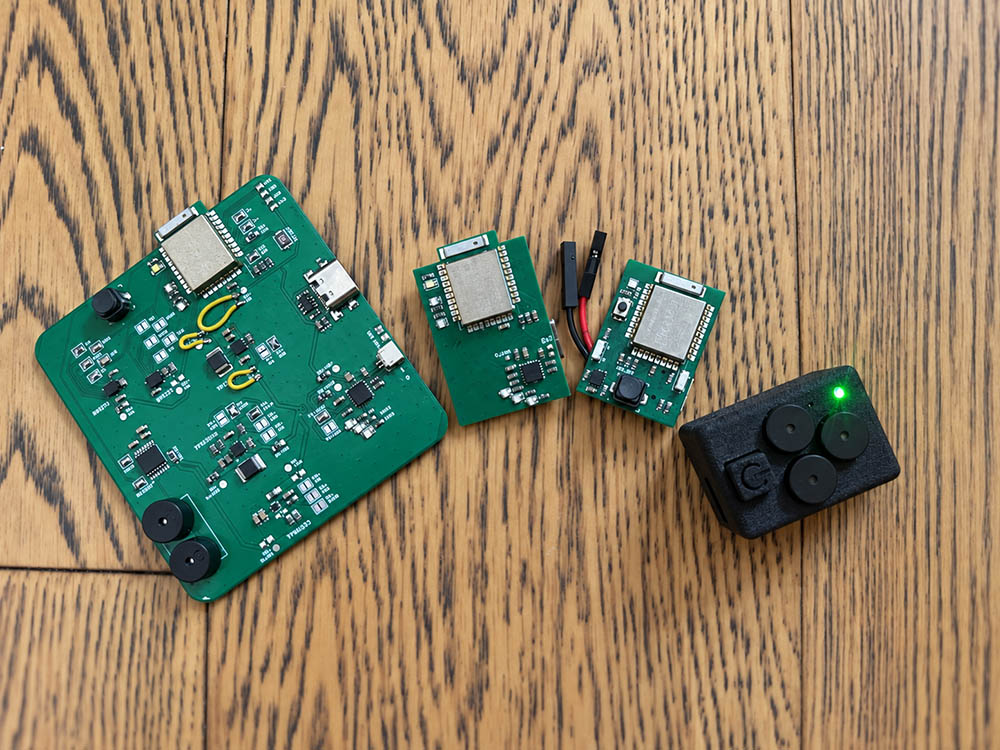
Iterative process – Once the basic functions were working, I moved to custom PCBs. The hardware went through several iterations rather than jumping directly to the final board. Each version helped expose something that could be improved: component placement, power management, charging, antenna positioning, sensor behavior and the overall mechanical layout. The progression from the larger development board to the smaller boards is probably the clearest visual summary of the project.
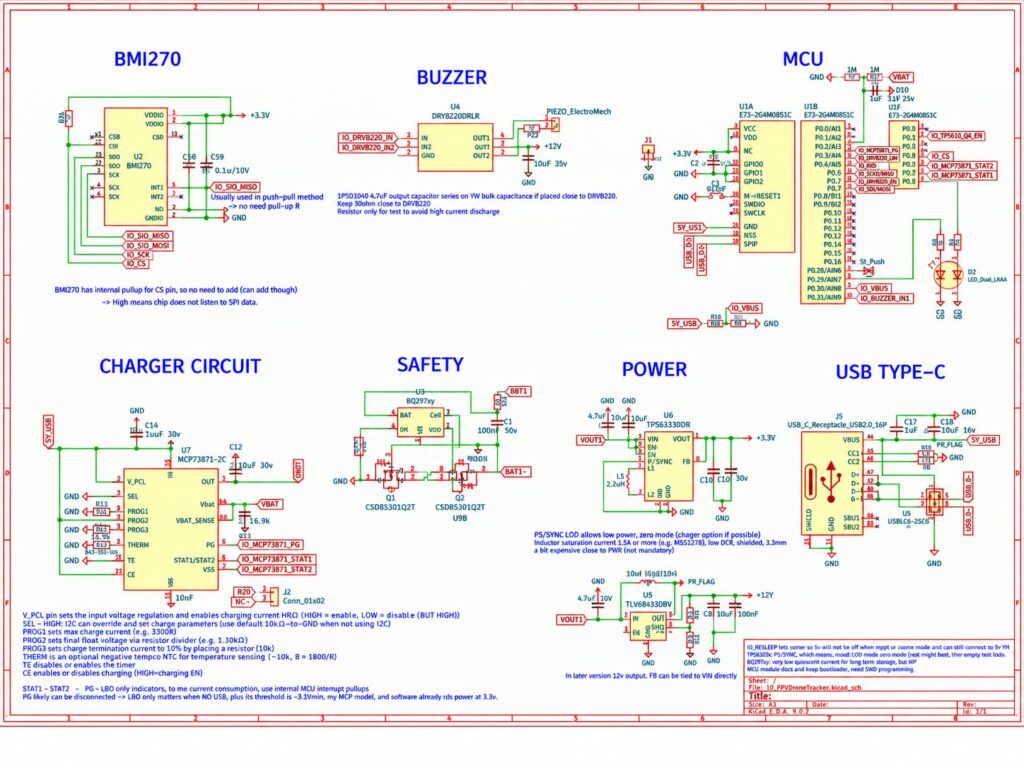
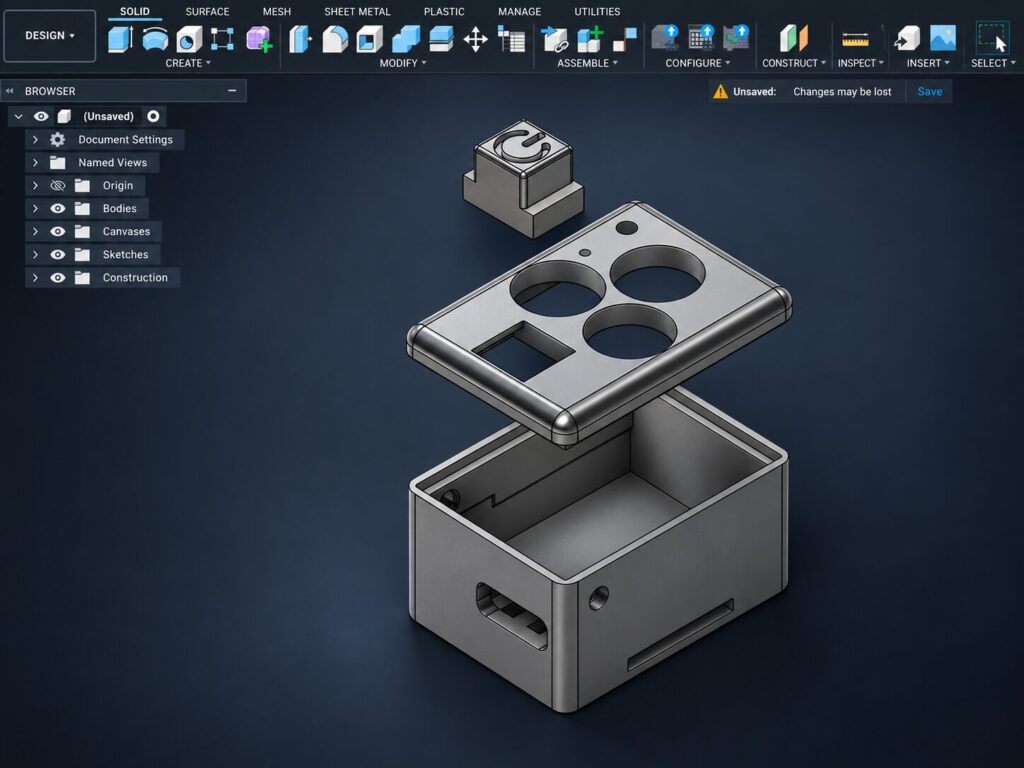
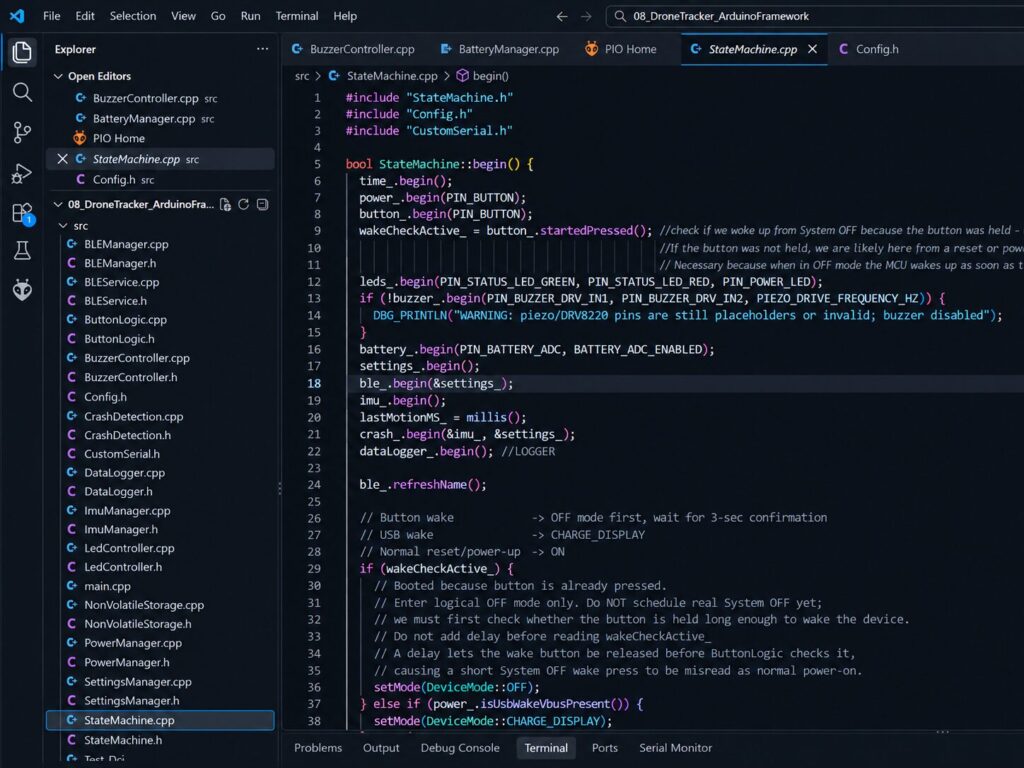
The project was developed across hardware, firmware, mobile software and mechanical design. KiCad was used for the schematic and PCB layout; the firmware and app were developed and tested in the coding environment; and the enclosure was designed in Autodesk before being manufactured and assembled around the electronics. Keeping all of these parts moving together was one of the more interesting aspects of the project, because a change in one area often affected the others.
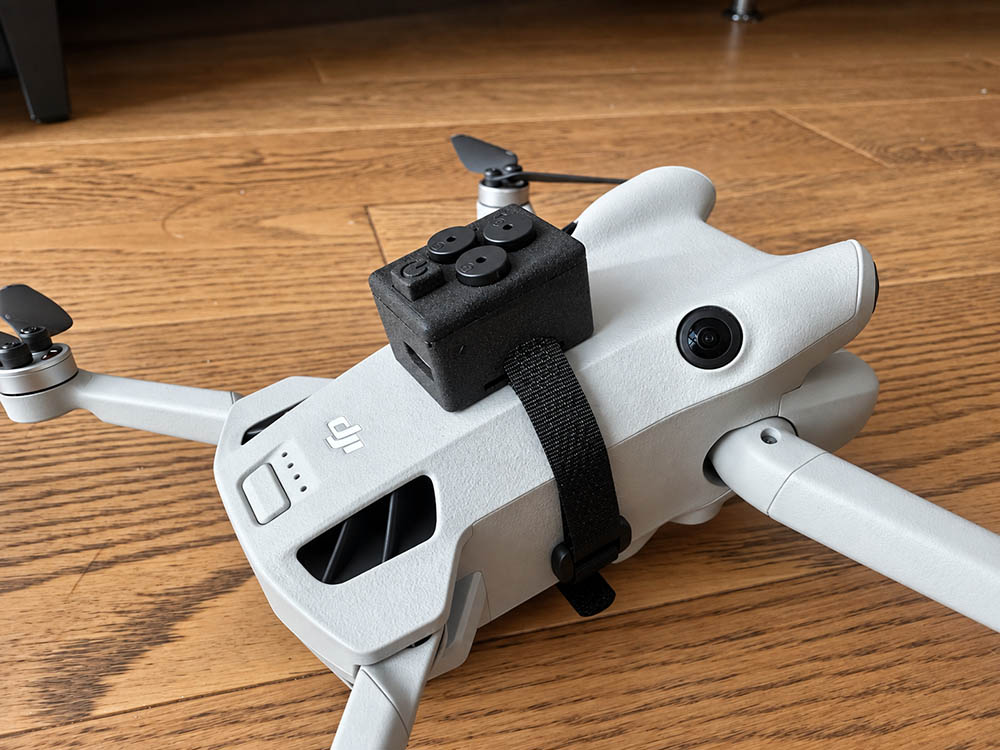
Final prototype – The final prototype is a small standalone unit that can be attached with a strap rather than being integrated into a specific flight-controller stack. That makes it suitable for different types of drones, including platforms such as DJI where modifying the internal electronics would make little sense.
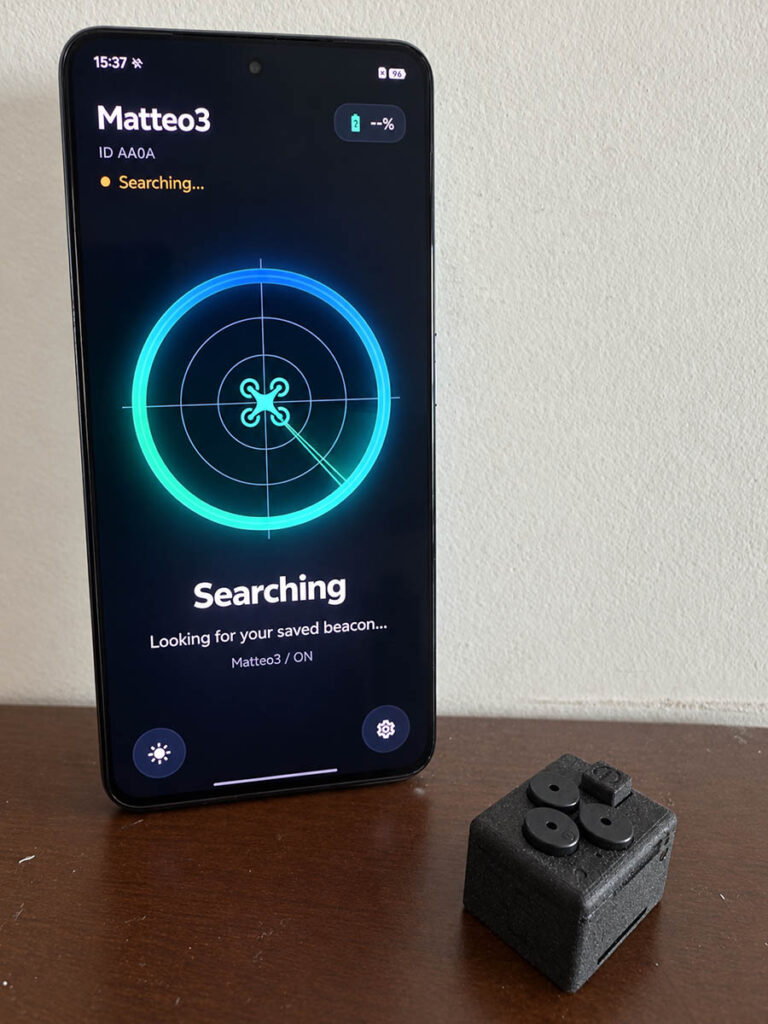
The enclosure contains the electronics, its own rechargeable battery and the recovery alarm hardware. From the user side the device is deliberately simple: switch it on, attach it to the drone and fly. The mobile app remembers paired beacons and can reconnect to them later, showing connection state, battery information and a live proximity estimate when the beacon is within Bluetooth range.
Functionality
During normal operation the beacon monitors motion while keeping Bluetooth available for the phone. Crash detection uses data from the inertial sensor rather than reacting to a single impact sample. A strong acceleration or rotation event creates a possible crash condition, and the software then checks whether the drone becomes stationary shortly afterwards. This two-step logic is intended to reduce false alarms from aggressive flying or isolated sensor spikes.
When a crash is confirmed, the beacon enters recovery mode. The audible alarm and visual indication make the drone easier to notice at close range, while BLE remains active so the phone can reconnect. The alarm is delayed briefly after the crash, which avoids immediately blasting the buzzer during the impact itself and gives the system time to confirm what happened.
The app adds the second part of the recovery process. It can remember previously paired beacons and automatically search for them. Once connected, the app displays the current connection state, the beacon battery status and a continuously updated proximity indication derived from Bluetooth signal strength. This is not a precise distance measurement, but it is useful for telling whether the user is generally moving toward or away from the beacon.
A settings page provides the controls that are useful in practice: the recovery mode can also be triggered manually, the alarm pattern can be selected, and crash-detection sensitivity can be adjusted. The device also manages charging, low-battery behavior and power-saving states internally so that these functions do not require constant attention from the user.